
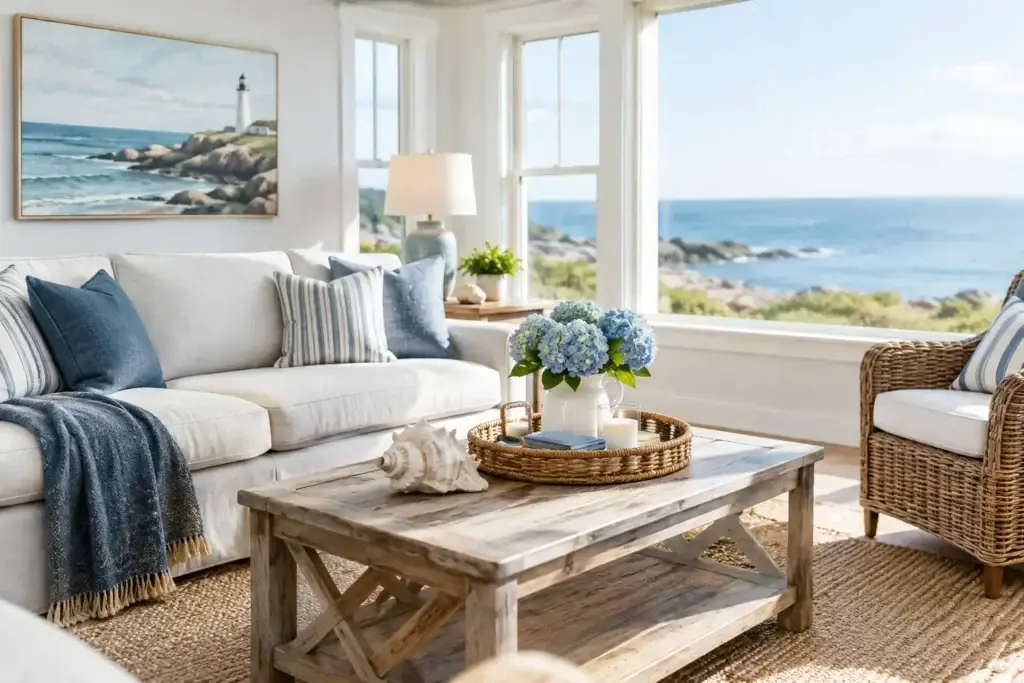
A room can hold onto a place long after the vacation ends. The right Maine decor does more than add a lobster or lighthouse to the shelf. It brings back the salt air after a rainy walk, the view from a favorite dock, the smell of pine, and the particular good humor that makes Maine feel like Maine.
The goal is not to make every room look like a souvenir shop. It is to choose a few thoughtful, place-rich pieces that feel personal in the home you already have. Whether you live year-round in the Pine Tree State, miss it from across the country, or return every summer, Maine-inspired details can make a space feel warmer, more grounded, and more like yours.
Start Maine Decor With the Feeling You Want
Before choosing colors or artwork, think about the Maine memory you want to bring into the room. Coastal Maine can mean sun-faded navy, weathered wood, rocky shores, and classic maritime stripes. Inland Maine may call for evergreens, lakes, loons, mountains, camp signs, and a little more rustic texture. A home near Portland might lean toward clean coastal graphics and local pride, while a cabin room can carry a more relaxed camp feel.
This is where a lot of decorating gets easier. Instead of trying to represent all of Maine at once, choose one mood as your anchor. A single direction keeps the room collected rather than cluttered.
For example, a breezy coastal living room might start with soft ivory walls, blue accents, and a bold Maine shoreline print. A lake-house bedroom might use forest green, warm tan, and artwork featuring a loon or moose. Both are unmistakably Maine, but they tell different stories.
Let one meaningful piece lead
Start with the item that carries the most feeling. It could be wall art of Acadia, a Maine flag-inspired throw pillow, a mug that makes you laugh every morning, or a puzzle featuring a place your family returns to every year. Once you have that focal point, pull one or two colors from it into nearby textiles, frames, or small accents.
This approach also works well for gifts. A design connected to someone’s hometown, favorite beach, college town, or beloved animal feels much more thoughtful than a generic coastal decoration.
Use Maine Art Where It Can Be Seen
Wall art is often the fastest way to give a room a sense of place. It does not require a full remodel, and it can carry a surprising amount of personality. A colorful Maine map can brighten an entryway. A vintage-style lobster print can bring energy to a kitchen. A peaceful coastal scene can settle a bedroom or reading nook.
Scale matters. One larger print above a sofa, bed, or console table usually has more impact than several tiny pieces scattered around a wall. If you prefer a gallery wall, give it a simple rule: keep the frame color consistent, or keep the artwork connected by a shared palette. A mix of Maine wildlife, landmark art, and local sayings can look wonderfully lived-in when there is one visual thread tying it together.
Do not feel limited to literal scenery, either. Maine has plenty of personality to work with. A clever phrase, a cheeky local reference, or a graphic design built around blueberries, buoys, puffins, and pine trees can add character without making the room overly themed.
Make the entryway feel like home base
An entryway is a natural place for regional decor because it sets the tone the moment someone walks in. Add a Maine-themed sign or print above a bench, then keep the rest useful: a basket for hats, hooks for jackets, and a durable mat for sandy shoes, wet boots, and everything in between.
This is a good spot for a little humor, too. Maine people know that weather is rarely a minor detail. A witty design gives guests a smile while making the room feel less formal.
Build a Coastal Color Palette Without Going Overboard
Maine-inspired color does not have to mean painting every wall navy blue. The best rooms usually begin with neutral foundations and let regional colors appear in smaller, memorable moments.
Think fog gray, driftwood tan, soft cream, and weathered white for the base. Then add sea glass green, deep Atlantic blue, lobster red, spruce green, or blueberry tones where the room needs life. These shades feel connected to the landscape without turning the space into a nautical costume.
If your home already has a modern or traditional style, keep it. Maine decor works best when it joins the room rather than fights it. In a clean, contemporary space, choose a simple graphic print and one textured throw. In a farmhouse-style room, try warm wood frames, lake-inspired artwork, and natural woven details. In a small apartment, a single Maine pillow or framed print may be all the regional touch you need.
The trade-off is simple: the more obvious the theme, the fewer themed pieces you need. A bright lobster-red statement print can stand alone. If the art is subtle, you have more room to layer in complementary pieces.
Add Everyday Pieces That Carry a Little Maine Pride
Decor should not be reserved for the wall. The things you reach for every day can make the biggest emotional difference. A favorite Maine mug turns a regular coffee break into a small reminder of home. A beach towel with an original coastal design makes a summer day feel more personal. A Maine puzzle on the coffee table invites people to slow down and stay awhile.
These pieces also make decorating flexible. You can switch them with the season, bring them to a second home, or give them to someone who wants a little Maine in a place far away. They are especially useful when you do not want to commit to a major style change.
At MaineBound Designs, original artwork across home goods, drinkware, wall art, and gifts makes it easy to find a design that matches the Maine connection you want to celebrate. The best choice is not always the most scenic one. Sometimes it is the funny saying your family repeats, the animal your kid loves, or the town name that immediately brings someone back.
Give Each Room Its Own Maine Story
A whole-house theme can feel forced if every room repeats the same image. Let each space show a different side of the state instead.
In the kitchen, cheerful designs featuring lobsters, blueberries, or coastal sayings feel right at home. In the living room, choose scenery, maps, or classic Maine colors that encourage people to settle in. Bedrooms are better suited to calmer artwork, such as moons over the water, pine silhouettes, loons, or muted shoreline photography. A game room or family room can handle the playful stuff: bold signs, Maine humor, and puzzles ready for a rainy afternoon.
For a child’s room, Maine wildlife offers plenty of charm without feeling babyish. Moose, puffins, bears, whales, and woodland scenes can grow with the space, especially when chosen in a clean, artful style.
Keep It Personal, Not Perfect
The most memorable Maine rooms have a little history in them. Pair a new print with a weathered photo from a family trip. Frame a postcard from a favorite coastal town. Put a smooth beach stone or a small piece of sea glass in a simple dish. Display the camp game everyone knows by heart.
Those personal layers keep new decor from feeling staged. They also allow your home to change naturally over time. You do not need to buy everything at once, and you do not need every piece to match exactly. A house that reflects years of visits, traditions, and good memories will always feel more inviting than one built from a single shopping list.
Choose the Maine details that make you pause for a second and say, “Yep, that’s home.” Whether it is a rocky coast, a quiet lake, a stubborn old saying, or a bright red buoy, that feeling is the piece worth making room for.