
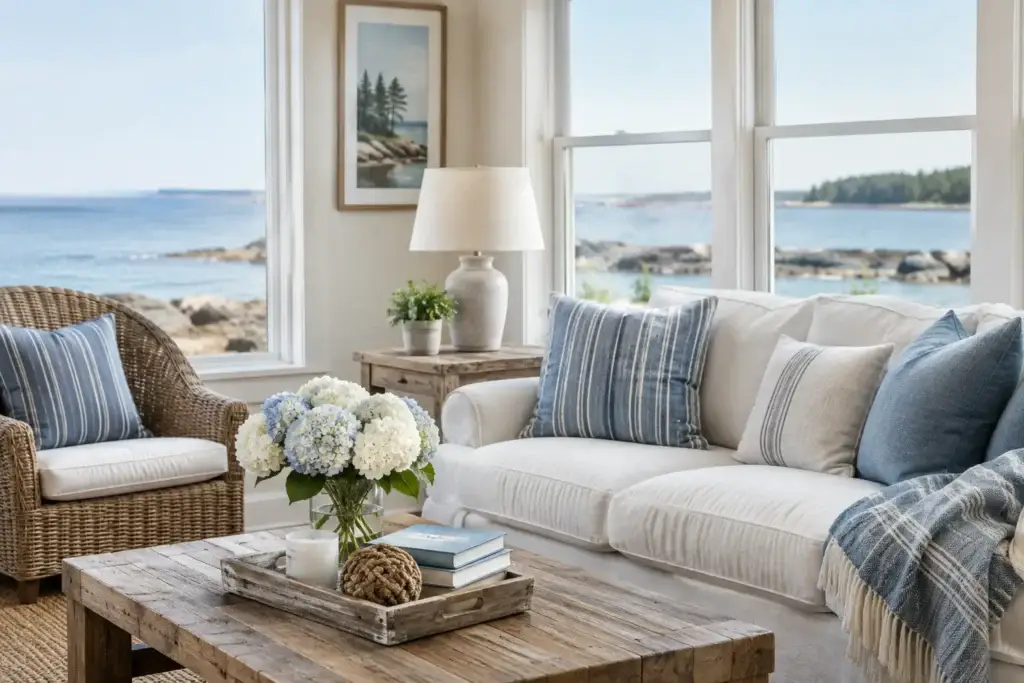
A room can have a blue pillow and a seashell bowl and still feel nothing like the coast of Maine. The best new england coastal decor does more than borrow nautical symbols. It brings back the feeling of an early harbor walk, weathered shingles after rain, a favorite lobster shack, or that first deep breath when you finally spot the ocean.
That feeling is why this style has staying power. It is relaxed without looking careless, classic without becoming too formal, and personal enough to make a house feel like the place your family returns to every summer. Whether you live in Maine, miss it from afar, or simply love a well-earned coastal view, the goal is not to recreate a souvenir shop. It is to create a home with real salt-air character.
What New England Coastal Decor Gets Right
New England coastal style is quieter and more lived-in than a generic beach theme. Think rocky shorelines instead of tropical palms, muted sea glass instead of bright aqua, and sturdy materials that look better with a little age. A Maine cottage, a Cape porch, and a harbor-side home may each interpret the look differently, but they share an appreciation for nature, utility, and local stories.
The palette usually starts with colors found outside: foggy white, soft gray, sand, navy, spruce green, weathered red, and the blue-gray of the Atlantic on an overcast day. These shades make a space feel calm because they do not compete for attention. Add a few darker accents, such as black metal, deep navy, or charcoal, to keep all those pale tones from drifting into blandness.
Most of all, coastal decor should feel collected. A framed lighthouse print, a hand-me-down wooden stool, a striped throw, and a favorite Maine mug can live together when they share an honest, easygoing point of view. The room does not need to match perfectly to feel pulled together.
Start With a Coastal Color Story
Before buying new decor, look at the largest surfaces already in the room. Wall color, flooring, upholstery, and window treatments set the direction. If your sofa is warm beige, lean into driftwood brown, cream, faded navy, and soft green. If it is cool gray, build around whites, slate blue, charcoal, and worn natural wood.
White walls are popular for good reason, especially in rooms that need more light. But a stark, bright white can feel more modern gallery than coastal cottage. Softer whites with warm or gray undertones tend to work better beside wood, woven fibers, and vintage-looking art.
Use bolder coastal color with intention. A red buoy-inspired accent or a pair of navy pillow covers can add energy, but spreading every color across the room can make the result feel busy. Let one or two shades carry the visual weight, then allow neutrals and texture to do the rest.
Choose Materials That Look Better With Time
A coastal home should invite people to put their feet up after a beach walk, not worry about leaving a mark. That is why natural, durable materials matter. Washed cotton, linen, jute, canvas, rattan, ceramic, wool, and unfinished or lightly stained wood all bring warmth without requiring a precious, formal look.
Wood is especially useful because it adds contrast to pale rooms. A painted side table, oak picture frame, reclaimed-style shelf, or simple bench can ground a space that has lots of white and blue. You do not need actual reclaimed lumber for the look. The point is choosing pieces with visible grain, a matte finish, or a little character rather than shiny, overly polished furniture.
Texture also helps a small room feel layered. Pair a smooth ceramic lamp with a woven basket, a cotton throw, and a framed print. In a bedroom, crisp bedding can be softened with a quilt and a nubby pillow. These details create the cozy, practical feeling associated with coastal New England homes, where the weather changes quickly and comfort always earns its place.
Let the Walls Tell a Maine Story
Wall art is where a coastal room becomes yours. Instead of filling every open space with anchors or scripted beach sayings, choose imagery that sparks a real memory or curiosity. Maine maps, lobster boats, lighthouses, sea birds, pine trees, shoreline scenes, and vintage-inspired town graphics each bring a sense of place without turning the room into a theme set.
Scale matters here. One larger print above a sofa or bed often feels more intentional than six small pieces scattered across the wall. For a gallery wall, mix landscapes with local references, typography, and a few family photos from favorite trips. Use frames in a limited range of finishes, such as natural wood, white, or matte black, so the collection feels connected even when the art varies.
This is also a smart place to show some regional humor. A clever Maine saying in the kitchen, a moose print near the entry, or a lobster-themed piece in a bar area can make guests smile. Thoughtfully designed art from MaineBound Designs can add that local wink while keeping the room personal and giftable.
Build the Look Room by Room
In the living room, begin with the pieces people will touch most: pillows, throws, rugs, and art. A neutral sofa gets an immediate coastal update from striped textiles, a blue-gray throw, and a wood or woven coffee table. Keep decorative objects useful where possible. A tray can hold coasters and remotes, while a basket stores extra blankets for cool nights.
Kitchens and dining areas can handle a little more personality. Display a favorite set of mugs, add a coastal tea towel, or hang art that nods to the local catch or a cherished harbor town. Drinkware and serving pieces make good seasonal updates because they add a fresh Maine feeling without requiring a full room makeover.
For bedrooms, aim for restful rather than overtly nautical. White or oatmeal bedding, a quilt in faded blue, bedside lamps with ceramic or glass bases, and art above the bed can create a peaceful retreat. Skip the urge to use every ocean symbol at once. One strong coastal reference is often enough.
Even an entryway can carry the theme. Add a durable runner, a basket for shoes or dog leashes, and a small piece of art that says something about where you have been or where you would rather be. It sets the tone before anyone reaches the living room.
Avoid the Tourist-Shop Trap
There is nothing wrong with a lobster, lighthouse, or anchor. They are beloved for a reason. The trade-off comes when every item repeats the same symbol, color, or pattern. A room full of matching signs and knickknacks can feel less like a coastal home and more like a display window.
Choose a few references that mean something to you, then balance them with plain pieces. If you have a bold lobster print, let the surrounding pillows and furniture stay simple. If your room already has striped upholstery, choose art with a quiet shoreline or map motif instead of more stripes.
Also consider your actual home and daily routine. A white linen sofa may suit a quiet second home, while a family room with kids, pets, and sandy paws may need washable covers and darker fabrics. Good coastal style is never about following rules at the expense of comfort.
Make It Feel Collected, Not Finished Overnight
The most inviting coastal rooms are rarely bought all at once. Give yourself permission to build slowly. Start with the color story and one meaningful piece of art, then add useful textiles, a few natural materials, and the Maine details that make you happy.
Keep an eye out for items that have a story: a framed vacation photo, a vintage paddle, a beach stone collected on a favorite walk, or a puzzle table ready for rainy-day afternoons. Those pieces bring more warmth than any perfectly coordinated catalog spread.
A home with New England coastal character should feel ready for wet boots, long dinners, visiting friends, and one more look toward the water. Choose what reminds you of Maine, leave room for the things you will find along the way, and let your space earn its charm over time.